.jpeg)
When the Fire Changes: Understanding Grief, Trauma and Loss After Wildfire
A few weeks ago, I was out camping and enjoying the beautiful late-August weather. It had been one of those days that feels almost too good to be true.
The weather was warm, and I was fortunate enough to get out on the lake with my paddleboard. The water was calm, the waterfowl were plentiful, and everything seemed peaceful. It was simply a wonderful day.
The evening was just as beautiful. A glass of wine, a good book, and a beautiful — and unusually warm — evening sitting around the campfire. It’s hard to imagine a much better way to spend an evening.
As I sat there, somewhat mesmerized by the fire, watching the flames dance and change into brilliant colours, something suddenly struck me.
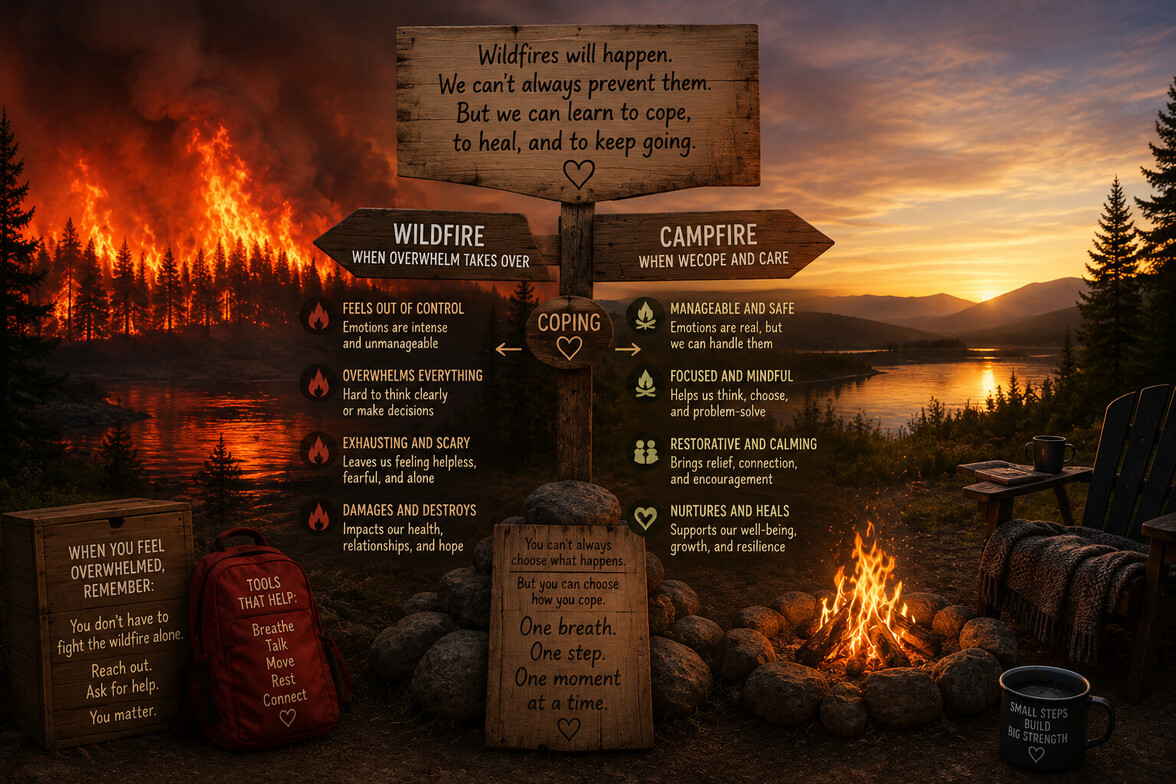
I thought about a metaphor I often use in my grief work: fire as a metaphor for life, grief and the things we cannot always control.
Sitting beside that fire, I was enjoying everything it had to offer. It provided warmth, comfort, light and a sense of relaxation. Yet I was also very aware of its potential. In an instant, a fire can shift from something soothing and beautiful into something destructive and dangerous if it is not carefully managed.
And isn’t that, in some ways, a lot like life?
How do we manage what we are given? How do we cope when something changes in an instant? And what do we do when the thing that once felt safe suddenly becomes frightening and overwhelming?
The Emotional Impact of Wildfire
I recently read an article from Alberta Wildfire noting that, as of August 17, there were zero wildfires burning in Alberta’s Forest Protection Area. It was the first time in 40 years that this had occurred at that point in the season.
My first thought was gratitude. We have been incredibly fortunate this year.
At the same time, I couldn’t help but think about our neighbours in British Columbia and the devastating wildfires they have been experiencing. So many of us know someone who has been affected by wildfire, or we have personally experienced the beauty of the areas now being impacted.
My own mind often drifts back to British Columbia. I have spent a considerable amount of time in the area, and although my experience is very different from those directly affected, there is still a sense of disbelief when I think about the destruction that fire can cause.
And even while the fires are burning, there is so much we simply don't know. The full extent of the damage may not be understood for some time. Communities will need time to assess what has been lost, what can be rebuilt and what will never be quite the same.
We have seen this closer to home as well.
In July 2024, Jasper was devastated by a rapidly moving wildfire, with a significant portion of the town lost to the fire. It was nearly a month before the fire was considered to be on hold, followed by several more weeks before it was declared under control.
When we remember that experience, it becomes easier to understand just how much time communities facing large wildfires may need before they can even begin to feel a sense of safety again.
The Grief That Can Follow a Wildfire
One of the thoughts that keeps coming back to me is something that can sometimes go unobserved: the emotional toll of wildfire can last for months or even years.
We often focus on the immediate aftermath — homes, buildings, possessions, evacuation and physical safety. Those things are incredibly important. But there is another layer of loss that deserves attention: grief.
When someone loses their home and belongings in a fire, there is often an initial overwhelming sense of gratitude that lives were spared. And that gratitude can coexist with tremendous grief.
I remember talking with good friends who had lost everything in a fire. Once they moved past the understandable thankfulness that no one had died, they were left facing an enormous loss.
Things can be replaced. But treasured objects, heartfelt letters, photographs, family keepsakes and the little things that carry memories cannot simply be replaced.
That is grief.
The fear, anger, sadness, disbelief and uncertainty that can follow a wildfire are real. It is important to acknowledge those feelings and allow yourself time to experience them.
The goal isn't necessarily to “get over it.”
Sometimes the goal is simply to manage it, cope with it and survive it — one day at a time.
When Wildfire News Triggers Old Memories
Even if you have not personally experienced a wildfire this year, hearing about devastating fires can bring up memories from the past.
News reports, photographs, videos, smoke or even the smell of a campfire can sometimes trigger memories of a previous experience. You may notice old feelings returning or find yourself reacting emotionally to something happening hundreds of kilometres away.
This can be especially true for people who have previously experienced wildfire, evacuation, loss or another traumatic event.
In these moments, it is important to recognize what may be happening rather than judging yourself for your reaction.
Your mind and body may simply be responding to a reminder of something you experienced before.
How Do We Cope After a Traumatic Event?
When something overwhelming happens, there isn't always a way to make the pain disappear. Sometimes all we can do is manage.
Here are a few simple things that may help when you are coping with wildfire grief, trauma or another significant loss:
- Stay connected. Reach out to family, friends and the people who support you. You don't have to carry everything alone.
- Limit your exposure to the news. Staying informed is important, but constantly watching updates, images and videos can intensify anxiety and emotional distress. Give yourself permission to step away.
- Return to some kind of routine. It doesn't have to be complicated. Regular sleep, eating meals and some gentle movement or exercise can help provide a sense of structure when everything else feels uncertain.
- Be patient with yourself. Grief doesn't follow a schedule. There may be good days and difficult days, sometimes unexpectedly.
- Consider professional support. Talking with a counsellor or other mental health professional can be helpful when feelings become difficult to manage or begin interfering with everyday life.
Most importantly, remember that coping doesn't mean forgetting. It doesn't mean that what happened wasn't important. And it certainly doesn't mean that you should simply “move on.”
Sometimes coping means learning how to carry what happened while slowly finding your way forward.
Returning to the Fire
As I think back to that evening beside the campfire, I keep returning to the same metaphor.
The fire was beautiful. It was warm, comforting and mesmerizing. But it also held incredible power.
Life can be much the same.
There are moments of beauty, moments of uncertainty, and moments when something can change in an instant. We cannot always control what happens around us. What we can sometimes control is how we care for ourselves, how we reach out for support and how we manage what comes next.
For those affected by wildfire, grief and loss, there may be no simple way through it. There may only be the next day, the next conversation, the next meal, the next night of sleep.
And sometimes, managing is enough.
So as we watch the fires burning in other communities, may we remember not only the physical destruction they leave behind, but also the emotional wounds that can remain long after the flames are gone.
And may we remember to be gentle with ourselves — and with one another — as we find our way through.
.jpeg)
Rob Smith
Contact Me
.jpg)
