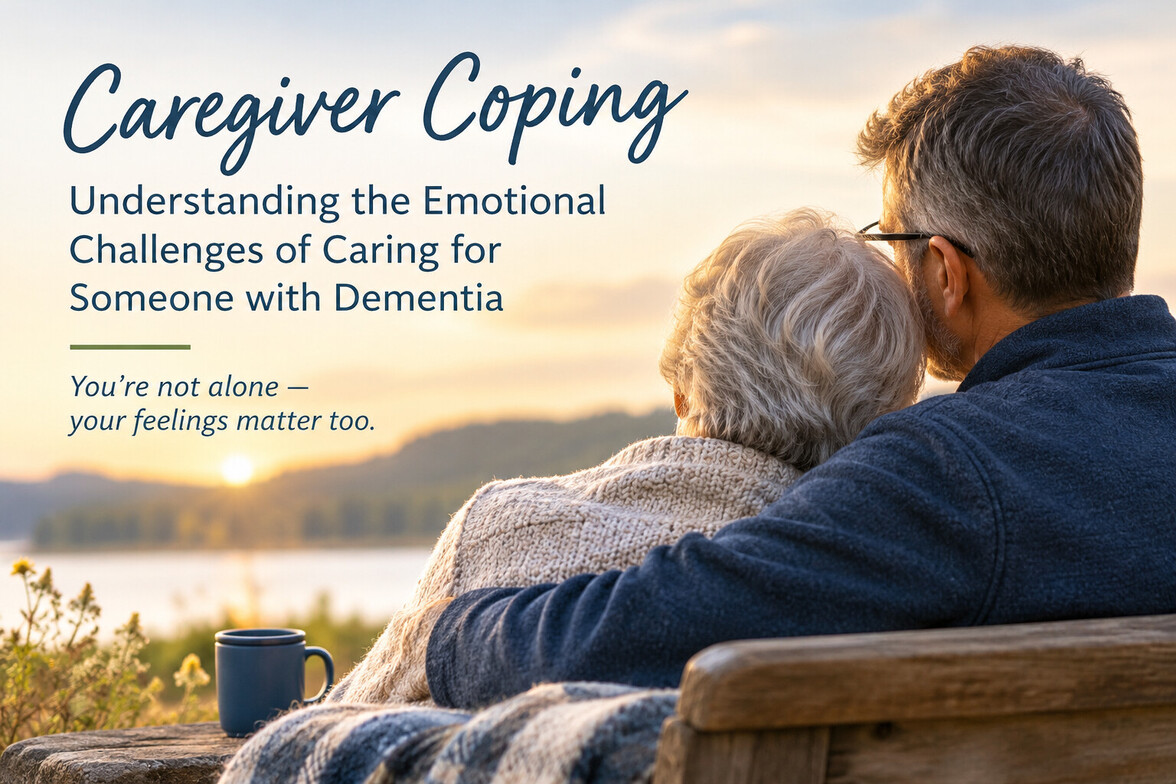
The Emotional Challenges of Caregiving: Understanding the Impact on Caregivers
In a recent blog post, I began looking at the often-unheard-from person in the dementia journey: the caregiver. While much of our attention naturally focuses on the individual living with dementia or another illness, we can sometimes overlook the person standing alongside them, providing care, support, and companionship.
In this blog, I want to continue that conversation by exploring the emotional impact of caregiving and some of the feelings caregivers may experience. In a future blog, I’ll look more closely at coping strategies and caregiver burnout.
As I write about this topic, I find myself reflecting on my own caregiving experiences. As I’ve mentioned before, I played a significant role in caring for my mother-in-law, father-in-law, and my dad. Looking back, it is an experience I don’t regret. I learned a great deal, and I would do it all over again in a heartbeat.
At the same time, I can now recognize how caregiving affected my life, both positively and negatively. It took a toll on me and those around me, sometimes in ways I didn't fully appreciate at the time. Perhaps part of that was the familiar thought many caregivers have: “If not me, then who?”
Caregiving often brings a significant shift in a relationship we have known and counted on for years. Whether we are caring for a spouse, parent, sibling, or friend, the changes can be profound. Along the way, we may experience a wide range of emotions, some easier to acknowledge than others.
The Emotional Impact of Caregiving
1. Grief and Ambiguous Loss
Caregiving often involves grief, even when the person we love is still very much with us. With dementia, we may grieve changes in memory, personality, communication, and the relationship we once shared.
This is sometimes described as anticipatory grief or ambiguous loss. We may miss the person our loved one used to be while continuing to care deeply for the person they are today. These feelings can be confusing, painful, and difficult to explain to others.
2. Physical and Emotional Exhaustion
Caregiving can be physically demanding and emotionally draining. What begins as helping with appointments, meals, or household tasks can gradually develop into a much larger responsibility as an illness progresses.
Sleep may become disrupted, personal time becomes limited, and there can be little opportunity to recharge. Often, the exhaustion builds gradually, and we don't fully recognize how tired we have become until we are already running on empty.
3. Frustration, Irritability, and Anger
It is natural to feel frustrated with the circumstances of caregiving. We may become frustrated with the illness, the changes in our loved one, the lack of support, or the seemingly endless demands placed upon us.
Sometimes, that frustration spills over into our interactions. We may become impatient, speak sharply, or react in ways that are not typical of us. Afterwards, feelings of guilt and shame can follow.
These reactions don't mean we don't love the person we are caring for. They may be signs that we are overwhelmed, exhausted, or in need of support ourselves.
4. Loneliness and Isolation
Caregiving can gradually shrink our world. We may stop going out as often because managing our loved one's needs in public becomes difficult, or we simply don't have the energy to explain what is happening.
We may withdraw from friends, social activities, and the routines that once brought enjoyment to our lives. There is also another kind of loneliness: missing the person we knew and loved, even while spending much of our time with them.
This can be particularly painful when others don't understand the changes taking place or how much our relationship has changed.
5. Fear and Uncertainty About the Future
One of the hardest parts of caregiving is not knowing what comes next. We may worry about how the illness will progress, whether we can continue providing care, and what will happen if our loved one's needs become greater than we can manage.
Financial concerns, decisions about additional care, and questions about our own health and future can add to the uncertainty. It can be difficult to plan ahead when so much feels unpredictable.
Caregiver Feelings We May Find Hard to Talk About
Alongside these more familiar feelings, there are emotions that can be particularly difficult to acknowledge. We may believe we shouldn't feel this way, especially when we love the person we are caring for.
Yet these feelings are more understandable than we might think.
6. Resentment and the Loss of Expectations
We may feel resentment that life has taken this turn. Perhaps we imagined retirement as a time for travel, companionship, hobbies, and enjoying the years ahead. Instead, we find ourselves taking on responsibilities we never anticipated.
We may wonder, “What happened to the plans we made? Is this what these years were supposed to look like?”
Acknowledging resentment doesn't mean we love our family member any less. It means recognizing that caregiving can involve real sacrifices, disappointment, and loss.
7. Loss of Identity and Independence
When caregiving takes up much of our time and energy, it can become difficult to remember who we were outside that role.
Perhaps we have put aside our interests, friendships, goals, or plans for the future. We may find ourselves asking, “Where have I gone in all of this? What about the things I wanted to do with my life?”
These questions deserve attention. Our needs, interests, and identity still matter, even when someone we love needs our care.
8. Loss of Intimacy and Connection
When caregiving involves a spouse or partner, the relationship can change significantly. Intimacy is about much more than sex. It includes affection, meaningful conversations, shared experiences, romance, and the comfort of feeling like partners rather than caregiver and care recipient.
Similar changes can happen in a parent-child relationship. A parent who once offered encouragement, guidance, or a comforting hug may no longer be able to provide that support in the same way.
We may miss these familiar moments of connection and grieve the closeness that once came more naturally.
9. Relief—and the Guilt That May Follow
Relief can be one of the hardest feelings for a caregiver to admit, particularly when someone we love is seriously ill.
We may find ourselves thinking, “I just need this to be over. I don't know how much longer I can do this.” Almost immediately, guilt may follow: “What kind of person thinks that about someone they love?”
These thoughts can be frightening, but they don't automatically mean we want our loved one to suffer or that we have stopped caring. They may reflect the reality of prolonged exhaustion and the desire for the struggle to end.
We can love someone deeply and still recognize that caregiving has become more than we can manage alone.
10. Despair and Hope Existing Side by Side
Caregiving can feel like an emotional roller coaster. On a good day, we may feel hopeful because our loved one seems more settled, we share a meaningful moment, or something goes a little more smoothly.
Then, a difficult day comes along, and we may feel discouraged or wonder how we will keep going.
Hope and despair can coexist. We can appreciate the good moments while grieving what is changing. We don't have to choose one feeling over the other.
Recognizing Your Feelings Is an Important First Step
Caregiving can bring love, meaning, connection, and personal growth. It can also bring exhaustion, grief, frustration, loneliness, and uncertainty. Often, several of these feelings exist at the same time.
Family therapist Virginia Satir spoke about the potential for growth through crisis. While caregiving may not be a journey we would have chosen, it can teach us things about ourselves, our relationships, and what matters most. That doesn't mean we need to minimize the difficult parts or pretend the experience is always rewarding.
If you are caring for someone living with dementia or another serious illness, I hope you can offer yourself the same compassion you extend to the person you are caring for. Your feelings matter, too.
You don't have to feel grateful every day, manage everything perfectly, or be strong all the time. Recognizing what caregiving is asking of you is not a sign of weakness. It is an important first step toward understanding your own needs.
You Don't Have to Navigate Caregiving Alone
If you are finding the emotional demands of caregiving difficult to manage, you don't have to work through them on your own. Sometimes, having a place to talk openly about what you are experiencing can make a difference.
Counselling offers an opportunity to slow down, sort through some of the emotions, and make sense of the changes happening in your life and relationships. It can be a place to talk about the grief, frustration, exhaustion, uncertainty, or even the feelings of guilt that can be difficult to share with family and friends.
Whether you are caring for someone living with dementia, supporting a loved one through another illness, or struggling with the many changes that caregiving brings, you deserve support, too.
If you feel that having someone walk alongside you might be helpful, I invite you to reach out. Together, we can explore what you are experiencing and find ways to support you through this journey.
You spend so much time caring for someone else. It's okay to take some time to care for yourself, too.
To learn more or arrange an appointment, you are welcome to visit my online booking page. https://robsmithcounselling.janeapp.com/
In a future blog, I'll explore some practical ways caregivers can cope with these challenges, find support, and recognize the signs of caregiver burnout. However, with the holiday season coming upon us so quickly, I think it's time to turn our attention to some of the challenges this time of year can bring and how we might navigate them. Where does the time go! It seems the holidays are just around the corner again.

Rob Smith
Contact Me